As I write this, most second level schools in Ireland have completed their Pre-Certificate exams. That, in itself, is not the fearful part – rather it is the process that pits our children into a competition where they scramble for precious college places.
For a long time the single deciding factor in the application process for most college places has been the CAO.
As it functions now, the CAO is an instrument that:
Looks at the results that the courses that are available under it’s remit
Looks at the numbers of students applying for each course
Applies supply & demand principles to allocate a number of points to each course
Assesses the points received by each student, and
Makes an offer to a student.
The process is from one point of view – fair. There isn’t a bias in that all students are assessed equally. (Whether that in itself is a bias that ignores disadvantage is another matter)
However, such an application process is very one dimensional. I know of no employer who would accept an employee with such a narrow criterion. Many companies value the concept of ‘fit’. (Not the physical version, but how well a potential candidate may fit an institution’s ethos, energy and values). In this context, fit cannot be assessed in a set of exams based on a curriculum set by the NCCA.
My eldest daughter has a wish to take up a career where the points in Ireland are quite high. Being resourceful (and ever-so-slightly stubborn), she has applied via UCAS, for the same course in the UK.
The process is radically different.
Complete an application form
Provide a personal statement
In some cases provide teacher references, along with predicted grades
Complete an interview process
An offer can be provisionally made dependant on a set academic set of results in the Leaving Cert
In this case the course directors can get a feel for a candidate, how he or she will fit with the values and work ethic that they want to see in an applicant.
A key difference is how beautifully inefficient the process is. It costs money to process the forms, read the statements and run an interview. It is nowhere near as cost effective as a centralised application system. In this, at least, I think the British System is ahead of ours.
I’d love to see us adapt a broader methodology of how we assess students for courses, and therefore careers.
Simply scoring good points does not guarantee that the applicant is suited for any given course. Conversely, not achieving the required points does not mean that a candidate is not suited for their desired course.
To quote the title of the excellent podcast by Simon Lewis, “If I were the Minister for Education”, it is a change I’d definitely be looking for.
Shortly after the invasion of Ukraine by Russia a flood of refugees (Internationally Displaced Persons) sought shelter across Europe.
At the time Ireland did all it could to help. Very quickly people were taken in at airports, PPS numbers were issued, and emergency accommodation was sorted. It was a moment of which I am proud.
Over the next few weeks and months we all realised that this war would take much longer than predicted, so our new Ukrainian neighbours began to integrate more into Irish society. They joined our schools, many started trying to learn the language, many more sought work and opened their own businesses locally.
In short, the Céad Mile Fáilte came into play.
As there is now a sense that the war is coming to an end, a number of Ukrainian families have made the decision to return home.
Some of those who have been lucky enough to find employment have found their own accommodation outside of the centres. A hugely positive move for those who could manage it. In the centres your space is not your own, and your privacy is limited. This option is not available to many due to the accommodation shortage across Ireland.
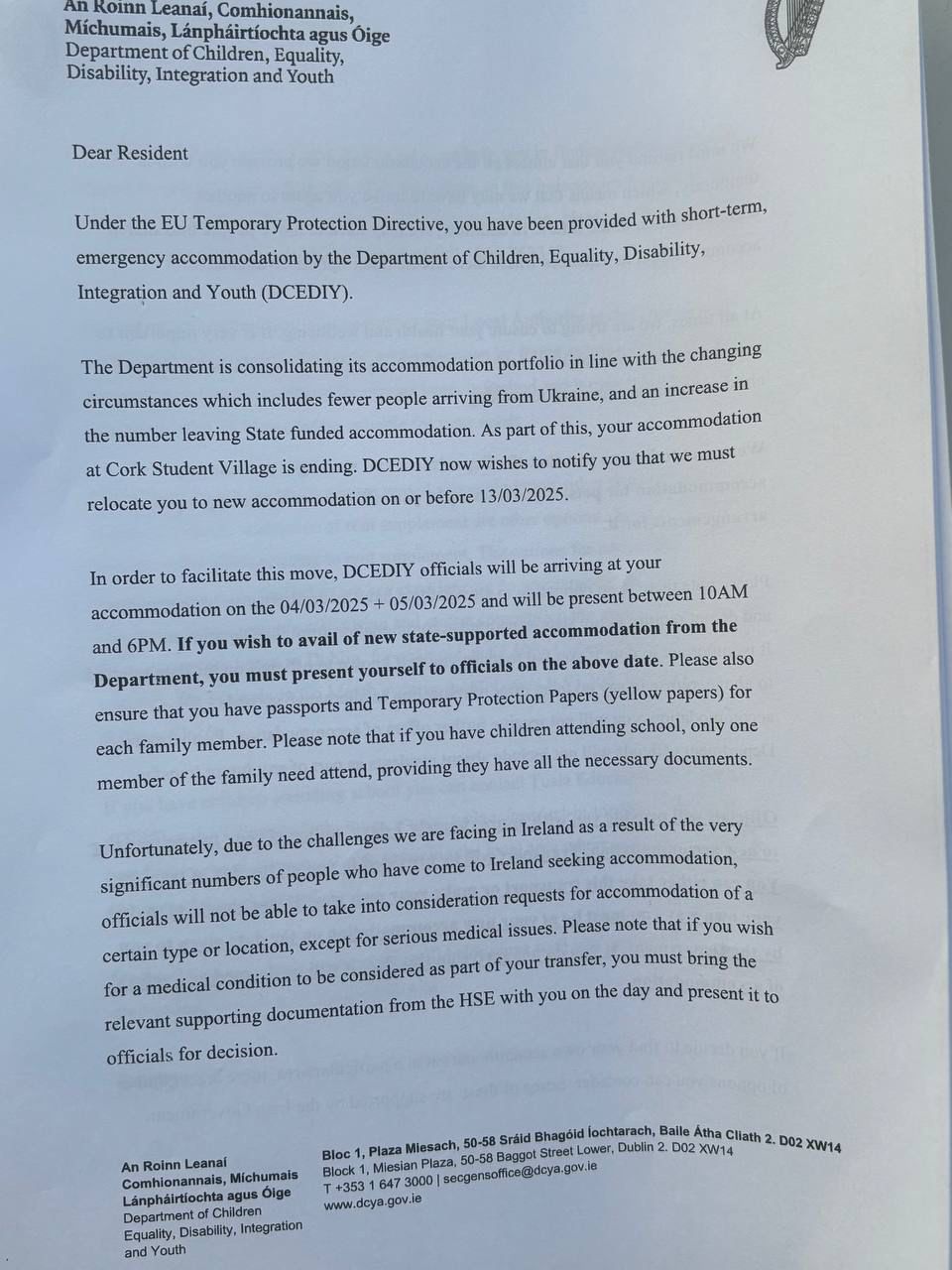
However the circumstances developed, the Department of Children, Equality, Disability, Integration and Youth has recently issued what are effectively hundreds of eviction letters to families and children across the country.
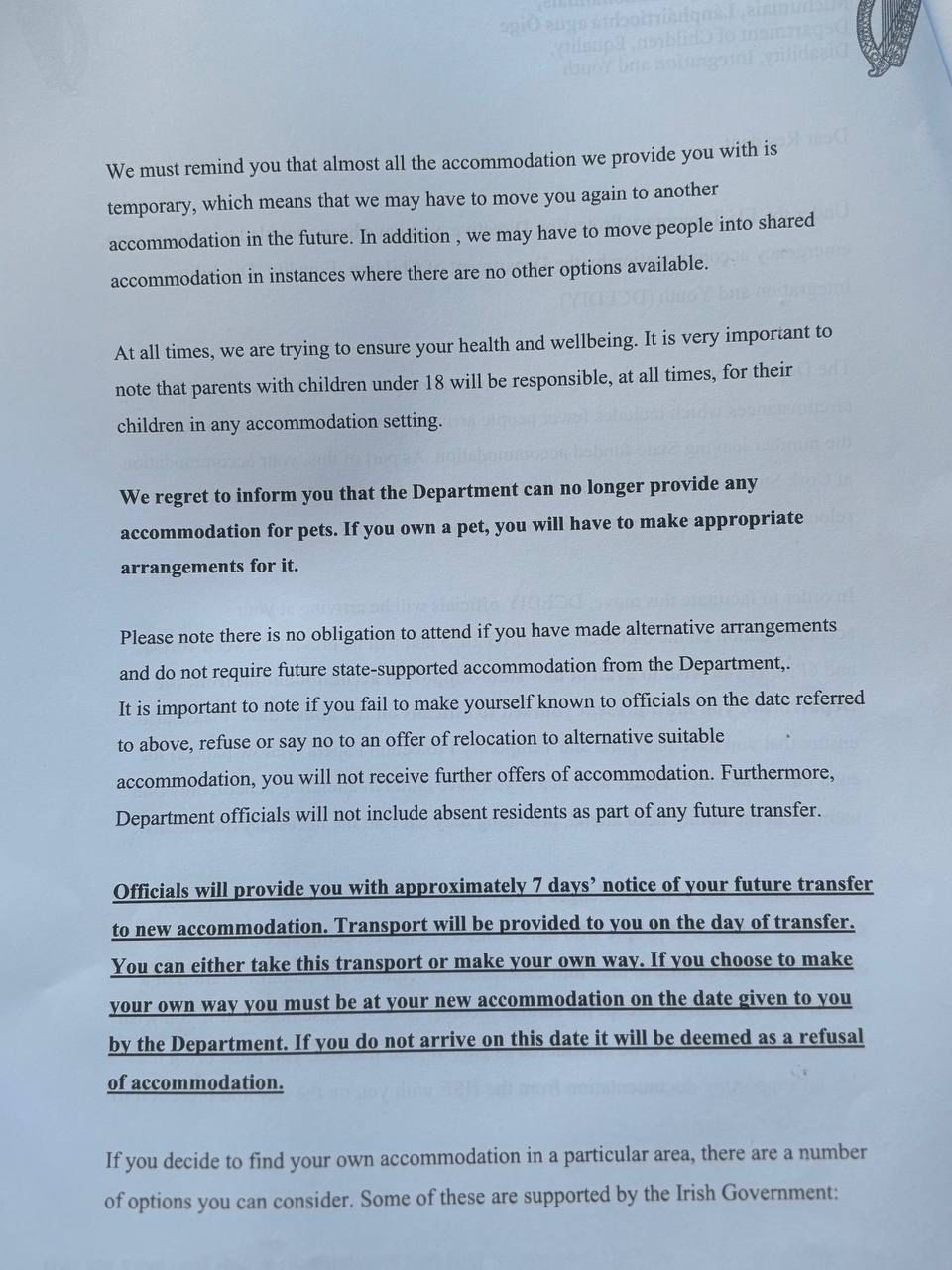
The letter is utterly devoid of compassion or humanity. The word ‘regret’ is used once, but only in relation to pets. The letter has caused an incredible amount of grief, stress and upset among those who have been unfortunate enough to receive it.
When the war began we took in traumatised people. We took in people who fled before the horrors of Bucha, we took in those who had lost their homes, we took in those who had lost family members.
We then talked about trauma informed practice, and, in schools at least, tried to keep this in mind when integrating our new students.
And now a department that is responsible for both children and integration is hurting children and undermining the integration that has been achieved. We are taking traumatised children, and retraumatising them
The letter provides the rationale that “the Department is consolidating its accommodation portfolio”. Two points here. The language in use is far beyond many of those who received the letter. Second, the department appears to be more concerned with a property portfolio than with the human beings under its supposed care.
The letter then gives a very tight timeline as to when these moves will happen.
In Youghal the residents at the Quality Hotel have been given about 2 or 3 weeks.
In Victoria Cross in Cork residents have been instructed to be available on 4th and 5th March between 10AM and 6PM with their documents. Failure to turn up will be seen as meaning that they are no longer interested in State Provided Accommodation.
Even better? They are then remined that they will be moved to temporary accommodation. In other words, don’t get too comfortable.
The damage this is doing to students is horrific. I know students who are preparing for State Exams and they don’t know where they will sit the exams. They do not even know if the town/city they are moved to will have a secondary school with the same option subjects. So they could end up not being able to complete their studies that they began 1.5 years ago for that option.
By moving students in the middle of the school year their studies are negatively affected. Even if they move quickly to a new school, the curriculum will have been covered in a different manner, different teachers have different styles, and the supports that a student benefited from are not immediately present.
The timing of this is very suspect. The Dail is currently not in session, so no TDs can make a minister answer questions in session. Was this deliberate, I wonder?
The letter appears to be unsigned – so who even is responsible for this decision?
The whole manner in which this has been done feels underhand. Again, the Department, in this action, is hurting children and undermining integration. All for the exercise of consolidating a portfolio.
There is now a series of articles being written, and more awareness about this issue. I really, really hope that something can be done to reverse this decision.
Israel has accused the Irish of being one of the most antisemitic countries in Europe.
That really is quite an allegation, and one that can’t be dismissed lightly. Why would they level such a charge against us?
On October 7th 2023 Hamas (A terrorist organisation that controls much of Gaza) launched a vicious attack against Israel. 1,139 people were killed/murdered that day.
Ireland, along with the Western World condemned the attack. Rightly so. The attack by Hamas was terrorism, a brutal attack on civilians, some of whom were simply attending a festival.
Israel has the right to defend itself. That is not questioned by any major government. However, what is happening in Gaza goes far beyond self defence. It is an attack on a whole people.
Over the course of this war people have lost their homes, their property, their lives. Most of those suffering are civilians.
The question is, though, is all of the above Genocide? That is a huge question/accusation, and one that needs to be taken seriously.
The International Criminal Court has become so concerned with the actions of Prime Minister Netanyahu that it issued an arrest warrant for him on 21st November.
South Africa has taken a case to the Internal Court of Justice to broaden the definition of Genocide. Ireland has lodged an intervention in this case (effectively supporting South Africa’s argument).
On 28th May 2024 the Irish Government, along with Spain and Norway, recognised the State of Palestine. As you can imagine, this move was met with fury by the Israeli government.
Between the Irish recognition of the State of Palestine, and its Intervention in the ICJ case, the Israeli Government has become so angry that it has closed its embassy in Dublin, labelling the country as antisemitic.
As a people we have tended to be sympathetic towards the plight of the people of Gaza. Israeli supporters are using a zero-sum fallacy here. If you support Palestine, then you must hate us.
No.
It is possible to both condemn the actions of Hamas and the actions of the Israeli State.
Israel needs to stop this war, and allow International efforts into Gaza to help the people there. The trauma and destruction will take generations to fix, and that work needs to start.
There’s a lot of paperwork comes into schools about well-being. The different techniques one can use to preserve one’s own physical and mental health. Sometimes, we get really nice posters to hang on the wall.
The thinking appears to be – ‘these teachers are stressed, let’s show them how to manage that stress well’.
For me, there’s a step missing in the logic. The syllogism is missing a step, the conclusion is therefore faulty. (I might have the terminology wrong here. After all, I last covered logic in 1989. Gulp)
Anyway. I agree with the first part of the sentiment. Teachers are stressed or unhappy with their career. This is to the extent that there are a number of teachers who either switch careers, or look to retire early as the personal cost is too great.
There are a number of factors in the profession that contribute to this stress:
Changing Curriculum Requirements
Outside influences on student work such as AI
The points race
The hated ‘Croke Park Hours’, that were brought in as part of Austerity and never rescinded
Underfunding in schools
The cost of training for new teachers
Terrible contract conditions for newly qualified teachers
To suggest that all of these pressures are managed simply by providing staff with well-being is a nonsense. For two reasons.
Well-being is not a poster, it is a practise. To learn meditation, controlled breathing, or any number of techniques requires time and guidance. It requires a mentor who will guide one, in short, it requires investment. Not all can devote the time required to do this.
The second reason is more fundamental. Why should the onus be placed on the employee to manage stress when the sources of stress are external to the employee?
Many teachers feel that there is a disconnect between the Department of Education and the reality of how teachers work for their students. Any teacher I know has huge concerns about the new Junior Cycle and its methods of assessment.
There is a knock on effect in that students now enter senior cycle unprepared for the academic rigour required for those subjects which had been common level up to Junior Cycle.
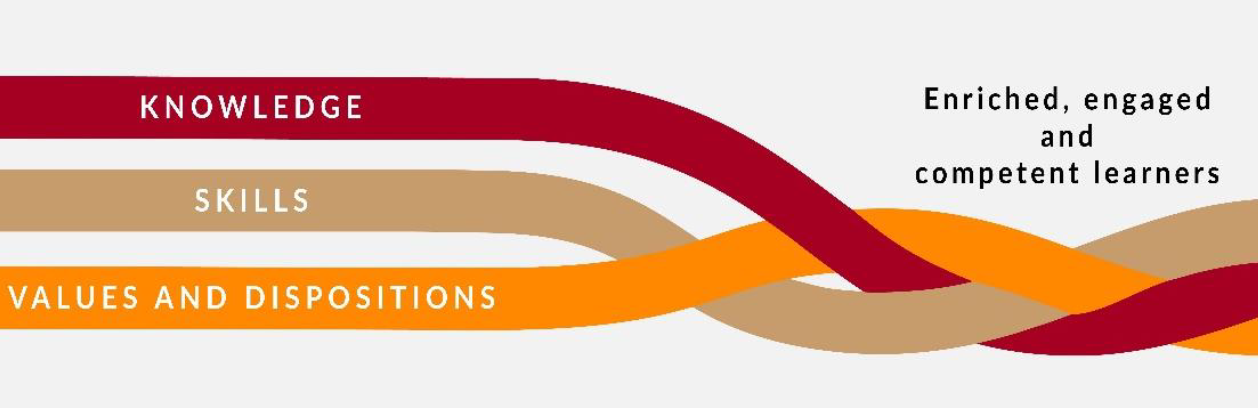
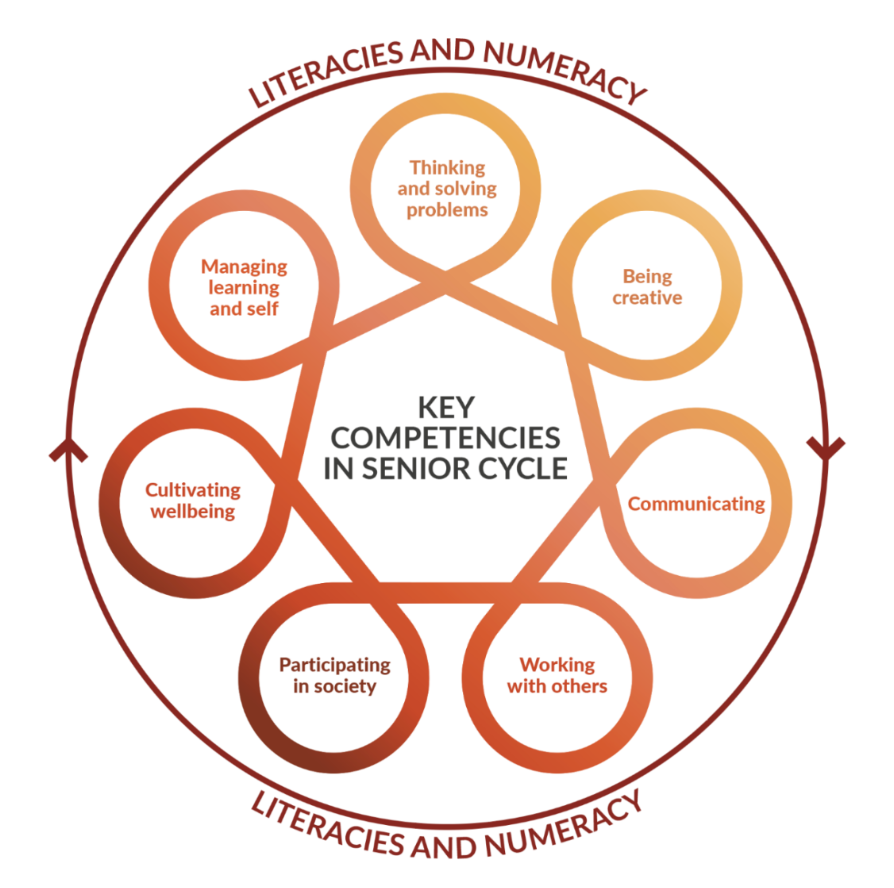
This in turn leads teachers to question what will happen as the new Leaving Cert Curriculum is rolled out. One tag line does not inspire confidence “Preparing Students for the 21st Century”, when the first subjects will become active in 2025, a quarter of the way into the 21st Century.
Many, if not most, teachers see ‘Croke Park Hours’ as a punitive waste of time. These hours have destroyed much good-will due to the absolutist nature of how they are implemented: Must be on-site; must be accountable, etc. Must not be trusted.
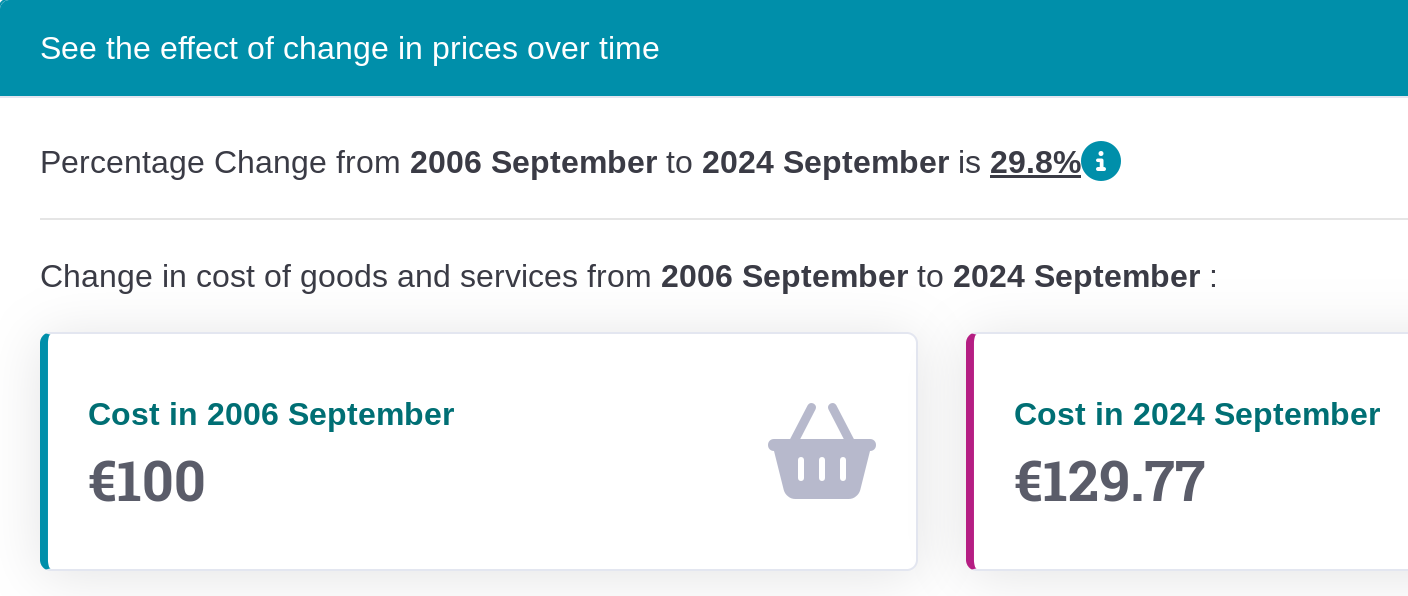
Capitation for schools has not increased much in 18 years. In 2006 the standard capitation was €298 per pupil. (Source – Oireachtas). In 2024, the standard capitation is €345. (source: assets.gov) An increase of 16%. In that time the consumer price index shows inflation at 29.8%. Effectively, school capitation has been cut in those 18 years.
So. Next time somebody suggests I practise Well-Being. I will take the time to enlighten them as to how this covers up structural issues that need to be challenged.
“You’re about to enter into the best in-service training you will ever get”
Those were the words spoken to a group of us in Athlone around June 2005 as we started our training to correct that year’s Junior Cert Religion papers.
That year I was involved in correcting Ordinary Level Religion. And what an experience it was. Just about every teacher will, at some stage, correct papers for the state exams.
The process is, frankly, impressive. Old as I am, this was in the paper days. Attend the marking conference, and then drive to the department to pick up your bundle of papers. The sheer volume of papers that you would receive was a bit of a shock to the system. No on-screen marking for us!
The following two years I corrected Higher Level Religion.
A few things struck me around the fairness of the system, and the opportunities offered to students of differing abilities:
There was a clear difference between Higher and Ordinary Level Papers
Questions were qualitatively different. At Ordinary Level more weighting was given to short answers so as to allow candidates an opportunity to do well
Higher Level tended towards more in-depth questioning
The language used in each paper had enough variation to suit the candidates taking that paper
The great thing about this system was that it allowed any student to do well and receive a grade that reflected their ability and effort.
An outstanding student could have a chance of achieving an ‘A’ (remember those?), while a student with challenges could have a decent chance to pass an ordinary level paper. There was plenty of graduation built into the system.
I have a few problems with the Junior Cycle. The biggest problem I have is with assessment. While we still have differentiated papers for English, Irish and Maths, we have common papers in other subjects.
If the Department is so convinced that common papers are the way to go, then why have differentiated papers for these three core subjects?
Next, if we could have had such a gap of ability and results in 2012, how is it possible to give a fair assessment to a range of students on a common paper.
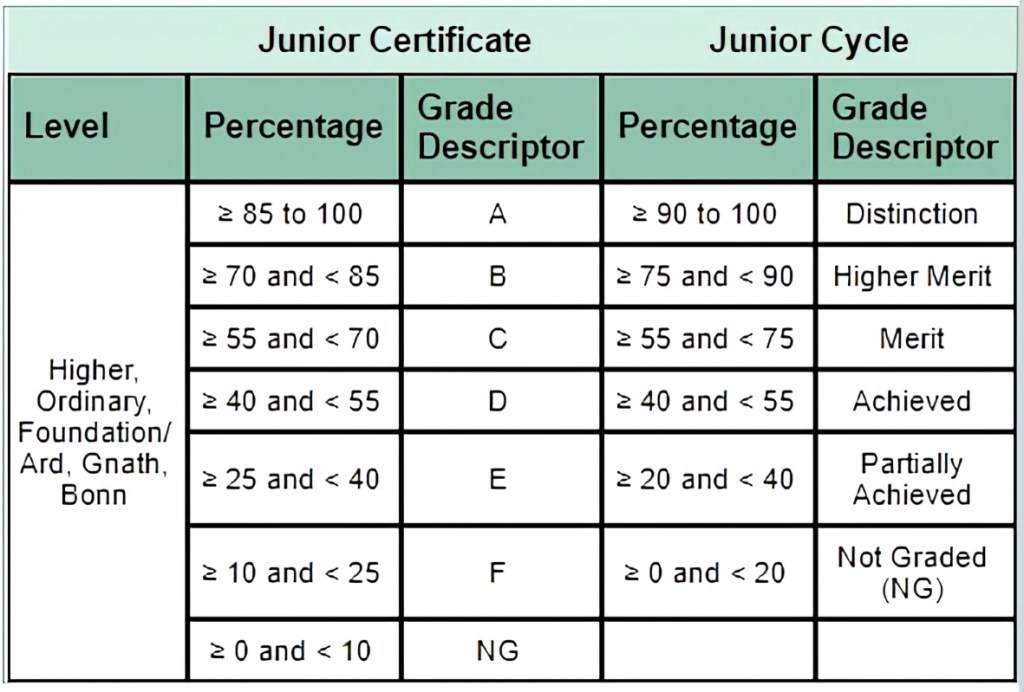
Finally, how is it possible that in 2012 15% of Higher Level students were able to get an A, but approximately 4% of students can now hope to achieve a distinction? This grade deflation is demoralising to those who have worked and who deserve to see their hard work rewarded.
I’m against the new Junior Cycle grading. I feel it’s fundamentally unfair to students (who don’t even like the nomenclature that goes with it). Unfortunately, as it is so new, I feel it will now be a very long time before any substantial change happens.
But before then, please have a look at the grading metrics, and allow those students who deserve a distinction, to receive that which they have worked for. 4% is not a fair breakdown in this case.
Education is a strange beast. It’s one of these public policy areas where everybody has an opinion – well, because everybody has some engagement with school.
Whether it’s our memories of primary, secondary, or (for some) college, we all have memories of our education that colour our perspective of what schools are, and hence, what schools can or should be.
For a number of years Irish governments have sought to provide a more empirical assessment of schools and Irish Education in general.
Should a country fall back in its ranking, then there will be a huge fuss made. Programmes may be implemented, and blame may be spread.
As with many other countries, Ireland has high hopes for our Educational Attainment. This is measured in a number of ways: How many adults complete second level; what’s the combined score for reading, maths and sciences.
In 2018 PISA tested students in 79 countries. The average score for reading, maths and sciences was 488.
In Ireland the score was 505.
The PISA average for completing higher second level education is
Another key indicator for the OECD is ‘Educational Attainment’, by which they mean the percentage of adults from 18-64 who have completed higher second level education.
Ireland has an 85% rate for educational attainment, while Sweden’s rate is 83%. Close enough to identical. The OECD average is 79%, so both countries are ahead there.
Ireland’s PISA score was 505, compared to Sweden’s 503. The OECD average is 488, so both countries are well ahead.
If we’re so close, why choose Sweden for comparison?
Well, the difference is in the spending. OECD has also tracked government spending in Education. As you’d expect, in Ireland we spend less than our international counterparts. (values are in US Dollar)
Ireland has long scrimped on spending in education. There was a brief moment of well-funded education in the early parts of this century, but the economic crash ended that. Ask any school leader and they will have stories of frustration and trying to scrimp and save in order to run their school.
So how is it that our education scores beat the OECD averages, even though we spend less on education than one of our closest matches?
Simple. As teachers we care deeply about our students, and will do anything within our power to achieve the best possible outcome for them. By refusing to let down our students, we have created an atmosphere where it is now expected that we continue to do so, despite continual underfunding. In this at least, we have become our own worst enemies.
When we are asked to compare Irish Education to Finland, then maybe we could take to heart this quote from the same OECD report:
“While teachers in Finland have always enjoyed respect in society, a combination of raising the bar for entry and granting teachers greater autonomy over their classrooms and working conditions than their peers enjoy elsewhere has helped to raise the status of the profession.”
So the next time anybody wants to talk about educational reform, here’s a radical idea.
Anyone who has ever stubbed their toe off of a sharp corner knows this simple truth:
There is a big difference between describing a stubbed toe, and the real experience of having stubbed a toe.
And so it is with grief.
If we (hopefully) live long enough, we will all have to deal with the awful reality of grief. The reality of knowing the loss of someone who we have loved, of someone who was an important part of our lives.
To date, I have had to face this reality on three occasions.
In June 1995 I was at home and my mam complained about pins and needles in her legs. She tried a few things – one of which was a hot bath to ease her muscles. Nothing worked, and when dad came home he took her straight to the doctor.
The doctor, to his credit, saw mam trying to get out of the car and told them to go straight to hospital. The initial diagnosis that Friday evening was of a stroke. However, on Monday evening a more thorough scan and diagnosis gave us the terrible news that mam had a brain tumour, inoperable. In the space of a few days we went from mam being healthy to her being told she was going to die.
The next months were a whirlwind, a blur. We chased every theory and quack in the vain hope of something that would hold back the tide, that would deny the inevitable, that would save her life.
Part of that journey was a pilgrimage to Lourdes.
Mam travelled to Lourdes in search of a cure, but that’s not what she received – she went there on a wheelchair, and came back on a stretcher. Instead there was a different type of cure.
You see, up until that point our house was focused on fighting the cancer – on pushing back. After Lourdes our house became a place to make mam comfortable, it became a place where we had accepted her ultimate diagnosis, and now aimed to preserve her dignity and her peace.
Lourdes did provide a type of cure – just not the type that we had anticipated.
On 15th September mam died. Hard to believe that that is now almost 30 years ago.
In the following years we, each of us, tried to deal with the grief in our own different ways. As is common with children who have lost a parent, we feared for dad.
I have a clear memory of one day being at a choral event in Cork and seeing a woman who had similar hair and dress style as mam. I was left breathless with the shock and reviving of her memory.
Weirdly, this is the natural way of things. If we are lucky, we get to bury our parents. There is something wrong with the world if it’s the other way around.
In 2018 it was the other way around.
On a cold February morning we got the terrible news that the body of my younger brother had been found – he had died of a heart attack.
Unlike mam’s death 23 years earlier, we had no warning, no time to prepare. Finbar was, it seemed, fit and healthy. He was only 46 and full of life.
I can honestly say that it was a full 2 years before I “got over” his death. In reality I never fully got over it, and thinking about the unfairness of such an early death will still make me angry and cry. Simply put – I still miss my brother, he was cool.
Grief is complex, deep, and varied. We use a lot of different theories and analogies to explain it, but the simple fact is that it hurts. A lot.
I regularly refer to the Kubler-Ross stages of Grief. It provides a framework that allows us to understand some of what we’re going through. (And yes, I know that some have questions around how accurate the stages are)
In 2023 my dad died at the age of 92. His death brought more of an existential aspect to grief. Both of my parents are now gone, along with my younger brother. This kind of thing really makes you think about your own morality.
Dad’s death and Finbar’s have affected me in totally different ways. While Finbar was in apparent full health, dad had suffered in his final years. In a way, I grieved the man I knew as my father as he faded in front of me.
When supporting someone who is grieving, perspective is important. Just because I have been through grief does not mean I truly get what another person is going through now. I’m describing a stubbed toe to someone who has just suffered from a stubbed toe.
Unlike a stubbed toe, however, grief takes a very long time to process. This is not something that can be rushed or forced. Our feelings are our feelings, no matter how inconvenient.
To contradict the poet – sometimes you do need to go gentle.
If you are dealing with grief talk to someone, and allow the myriad of emotions to happen. Sometimes it’s OK to not be OK.
A final note – this reading of Dylan Thomas’ “Do Not Go Gentle” is incredible. Take a moment for yourself, and do be gentle with yourself.
A few years ago I had a very definite routine to writing a blog. Once a week I’d sit down and just hit the keyboard. I used to look forward to the process of teasing out my own ideas, and had a target of 500 words each time I sat down.
I had a journal with a few pages of ideas and themes that I would explore, and had built up a reasonable audience for my ramblings, who kindly shared on (mostly) Facebook and Twitter.
And yet, in the past few years I have not written much at all. And why?
The chief reason, I think, is grief. My younger brother died from a sudden heart attack in 2018. I could never have expected the depth to which this has affected me.
Apart from grief, there was the incredibly mundane, yet grueling, task of dealing with his estate. For a period of 18 months I was dealing with emails and documents where every subject line included ‘Finbar Hurley, deceased’.
Each and every email was a bit of a kick in the gut, reminding me of our loss.
That and the failing health of my father sapped any will I had to write. And the longer I stayed away from writing, the harder I found it to return to what was an enjoyable activity.
And so, here I am. Trying to get back into a habit of writing over six years later.
The old adage is that you should write about what you know. Well, in the past 6 years I have come to know grief. I have come to know how differently it an affect you, and that it can be totally unpredictible.
My brother Finbar died suddenly. We had no warning, no time to prepare. I can honestly say that it was a full two years before I felt normal again.
While I know some of the theories of grief (5 stages, etc), reality is something totally different. A bit like describing a stubbed toe, compared to actually stubbing your toe.
And so, bit by bit, I fell out of a habit that actually gave me satisfaction. Amazing how that can happen.
And how to overcome writer’s block? Forget about perfectionism. Many writers have written about their process. How they just sit down to write, and worry about tidying up the narrative later.
So. Wish me luck. Time to get back on this particular track.
My dad died on 12th February 2023. He now follows my mother who died on 15th September 1995 and my younger brother Finbar, who died on 6th February 2018.
Good morning everyone, and thank you for being able to make it today to help us mark dad’s life, and pray for him as we bring him to his final resting place.
A number of people were unable to make it yesterday or today and have separately sent their condolences. On behalf of the family, I’d like to thank them for their kind messages.
A number of our cousins also couldn’t make it today. I’d ask you to also keep them in your thoughts and prayers.
I’d like to start by thanking a number of people:
Thanks to Marie Walsh & those at DISC hire for the lights we used yesterday for the parking at the house for everyone coming in.
I won’t chance names here, but thank you to all of those who came together last night for catering and setting up the house. You helped create an atmosphere that dad would have been proud of. It gave a real sense of a community coming together to help out.
The staff in Egan’s funeral home have been an incredible support for us. They have guided, advised, and tolerated changes with no fuss. Billy, Andy, thank you.
I’d like to thank those working at the County Council yard in Killeagh – at very little notice they came up and patched up the road. It helped those who had travelled to offer their support.
Dad was proud to be a member of the Inch Point to Points, and it was great that they were able to help out with traffic and directions yesterday.
I’d like to thank Rita Scannell and Anne Keniry for looking after the flowers.
I’d also like to thank Rita for recording this so that friends and family can join us online.
For the choir, all of those who sang, and also for John Casey, Catherine Keniry and Mary Daly for helping to organise and bring it all together.
I’d like to thank the staff of Glendonagh who have been very good to us and for looking after dad over the past year.
I’d like to thank Fr. Frank O’Neill who came up to Glendonagh on Sunday to say prayers with us and bless dad.
Fr. Eamonn Barry has been a good friend to our family for a number of years. He was very good to dad in the years after mam died.
I’d like to thank Fr. Tim for being there for us on so many occasions over the past number of years. He has been a great support, and continues to be so.
Thank you to all of those who visited dad over the past few years. He really enjoyed and appreciated those visits.
They say it takes a community to raise a child. Well over the past few days we have seen a community come together to help say farewell to one of its own.
How do you sum up a life that has spanned 92 years? I could try for a load of anecdotes about the things he said and did, but would need the bones of 92 years to get through it all. He lived such a full life.
To try to go over dad’s life is like taking a peek at just how much this country has changed in this lifetime.
Dad was born in 1930, into a small household with a small farm just up the road from here in Ballykilty. He sometimes talked about going to Youghal with his mother on the horse and cart, and how she would check her purse every so often to make sure she hadn’t lost her money. Things were tight.
He sometimes talked about seeing World War II barrage balloons out at sea protecting the convoys on their way to England.
He was 14 when the war ended, and only a short time later he moved to England to make a living. He spent his time on building sites over there, coming home with a feast of stories, and the start of a plan to buy his own farm.
For years dad worked as a labourer for others, building up his reputation and his finances until he was able to eventually move on to buy the home farm in Ballinalough. And it was there that he built the rest of his life.
Dad was a man who was willing to take chances, to work incredibly hard, and he was willing to glimpse a future and try new things.
At our brother Finbar’s funeral 5 years ago I was told how dad was one of the first people in County Cork to build slatted units for cattle. He had the ability to think outside of what was normally done, and to go for a big plan.
Dad was gifted. He knew machines, and he knew how to build and how to fix them. Once, we were cutting silage and something got caught in the blades of the mower, causing the gears in the tractor to get damaged. Dad, along with our cousin Matthew, took the rear of the tractor apart, found the damaged gears, replaced them, and rebuilt the tractor. 35 years later and I’d still be trying to fix that particular jigsaw.
There was another time when the one ton bags of fertiliser were coming onto the market. Dad went to Atkins in Midleton, I think it was, and had a long, slow, really good look at the mechanism for loading those bags into a fertiliser spreader.
And then he went off, bought the pieces, and made one for himself. I don’t think he ever heard of Patent Laws.
He was able to do so much, and was always willing to learn more, to try out more.
He loved farming so much. He just loved animals. He just wasn’t so good at remembering their names. Every dog we had as a family ended up being called ‘shep’, no matter what name the rest of us had given that dog.
Even though he officially retired at the age of 65, nothing of that sort actually happened. He was always checking in with Mark and Finbar on how they were doing. Walking the fields, checking mart prices, watching the farming programmes. Believe it or not, he still helped Mark draw silage at the age of 89. Think. 89 years old and still able to get into a tractor and draw a few loads of silage.
Dad loved sport. He was a proud member of the Inch point-to-points, and loved going up to the track to help out and to watch the races.
For years, decades, dad followed the point-to-points every winter. He only finally stopped when he physically found it too hard to be on the course in winter. But he never lost the love of horse racing. He’d constantly follow racing on the TV, and knew so much about trainers, breeders and jockeys.
He loved following those he knew, such as Richard Rohan. Any time Richie was racing dad would know, and be looking for that race on TV. Even better if the race was close to home and he could get someone to give him a lift.
He loved following how Seamus Rohan was doing with any horse he had. Seamus has a horse racing today, and no doubt, hopes that dad can put in a good word. To be fair, though, based on his track record, Seamus and the horse may need full on Divine Intervention rather than just a good word from dad.
Because of his love of horses, dad particularly enjoyed visiting Seamus, or as Thomas calls him, “The son that dad never had”
Dad regularly followed soccer, GAA and Rugby. He just enjoyed seeing teams out there, excelling in their various disciplines. Unusually enough, in following the premier league, he never had a favourite team, just followed the matches for the game itself. He sometimes timed his visits to others based on what sports they tended to watch, and whether there was a match or race on that day.
So, for all of the Shanahans and the O’Donoghues, some of those visits weren’t just for the chat. He loved to watch a good game while visiting. If there was a cup of tea going, so much the better.
At heart, dad was a family man. While mam was alive he simply worked the farm, came home, and spent time at home in the evenings. That was his week; that was his life.
It took years for mam to convince dad to have a holiday. He finally relented and brought 6 of us in a caravan to Killarney. Some years it was lovely, some years it rained non stop. But it was part of a routine, a treat and was something that mam and dad loved doing together.
When we were older mam and dad took holidays on their own to Killarney and up along the west coast, going from B&B to B&B. One year when they were gone I went looking at a van that dad had left parked at home.
Turns out he’d removed the spark plugs. Kind hearted he may be. Fool he was not.
It’s one of life’s cruel strokes that mam died aged 64, and dad lost the chance to spend a retirement with her.
However, Dad learned to deal with mam’s death, and over time learned to live a life full of friendship and care of others.
Dad was a person who cared deeply for others. His generosity was born out of instinct and “the right thing to do”.
Things like you didn’t miss a funeral, you visited the sick, you visited those in a nursing home. And, you’ll like this one Tim, you paid the priest for the petrol money or the dues at Easter and Christmas.
Years ago, before Thomas the elder was born, dad and mam fostered Martin Rohan for about 6 months.
It was years later before we knew. I suppose that’s because dad didn’t boast or make a fuss.
Martin reckons that this was why he always felt he had a special connection with mam, and why he was always able to get away with things that nobody else could in our house! Martin and the late John Coleman were in a special category there.
Dad tried to avoid being judgemental. For example, if he heard of a relationship breaking down, his only comment would be ‘isn’t that sad’, and show concern for those affected. He was simply a thoroughly decent and a good person.
A word that has been used a lot over the past few days is ‘Gentleman’. Dad showed respect for those around him. He was always polite, and enjoyed spending time with people. He took the time to know others, and took the time to sit with them and to talk. And he could hold a conversation with virtually anyone.
He had a great way with people. I don’t think he ever saw it himself – it’s just the way he was. He was really shy about some things.
At his 25th wedding anniversary in the Walter Raleigh, I can clearly remember Johnnie and Mattie, his brothers, having to persuade dad to give some bit of a speech. “Tommy, you have to say something, it’s like a groom at a wedding”
He had a great sense of humour. Not so much in the sense of telling jokes, but in the sense of finding humour in the world around us.
He once invited a woman working for the Ordinance Survey into dinner. She was surveying the sheds and buildings on the farm for the latest maps.
As we were eating she got the usual style interrogation. When dad found out she was married, but had no visible ring, she said, “I only wear the ring when I’m going out”
To which he quickly replied
“Shur that’s exactly when you shouldn’t be wearing it!”
You can only imagine the glare he got from mam.
In later years the love that dad had for his siblings and in-laws was so powerful to see. He had such a special place in his heart for Agnes O’Donoghue, Nora Buckett, Josie Hurley and Joan Hurley. He loved visiting them, and loved their visits. He always took the opportunity to visit Mick Shanahan and the late Ted whenever possible.
Dad loved his grandchildren, and you would see his face light up anytime he was with them. Lena, Andrea, Daniella, Hannah, Thomas and Molly. He would be so proud of you for helping out today, and he loved you all so much.
Dad lived a full, productive and a happy life. Never far from those who he loved. He started with virtually nothing, and has created a legacy that we can look up to. He worked hard, respected those around him, and by instinct showed kindness and generosity at every turn.
I think we could all learn a bit from him.
As we leave here today, we will bring Dad to St. Fergal’s cemetery and we’ll lay him to rest beside Mam and Finbar.
Following that, on behalf of all the family, I’d like to invite you to the Thatch for some food afterwards.
I’ll finish by reciting the prayer of Cardinal Newman
Over the past few years many of us have worked under the assumption that our Social Media platforms would continue without too much disruption.
This was in spite of the fact that we often did not agree with the direction of the leaders or the owners of the companies which we used.
Or. Should I say, the companies that used us? The old phrase is “If you are not paying for it, you’re not the customer; you’re the product being sold“
We have been happy to present our lives to the world using a platform that mined our information and then sold that same information to allow for targeted advertising. The volume of data that was mined is simply mind-boggling.
In 2011 Max Schrems wrote to Facebook to request a copy of the data they had on him. Keep in mind that he had deleted his account the previous year.
All of the ‘free’ social media companies are precisely that – companies. Their purpose is to make money, their product is the information that we freely give them.
Enter into the fray one Mr. Elon Musk.
Musk has been an interesting character for years. His antics at Tesla and SpaceX have gathered a huge fan-base.
However, his actions and decisions around the purchase, non-purchase, and actual purchase of Twitter have proven to be disastrous to the company.
There are plenty of software engineers who warn that the cracks are already showing, and that Twitter could collapse very, very soon.
Hence the Great Social Media Migration.
Mastodon has become the home-of-choice for tens of thousands of Twitter users, despite many having misgivings regarding a different level of complexity. But Mastodon isn’t the only alternative out there.
The interesting thing for me has been the whole concept of the Fediverse.
There is no ‘owner’ of any given platform
Platforms can be hosted over a number of servers
Servers can interact with each other (Federate)
Servers can block other servers that don’t maintain the same rules or code
So I’m moving from Twitter. Starting on a journey in the Fediverse. Exploring Mastodon and Pixelfed. I like the idea that my data is mine to share, I like the fact that there are no ads.
If you decide to jump onboard, go for it. The tone on the mastodon.ie server is very positive. But if you do join, don’t be the product. Subscribe, or throw a few euro towards the project. I think we all benefit in the end.