Shortly after the invasion of Ukraine by Russia a flood of refugees (Internationally Displaced Persons) sought shelter across Europe.
At the time Ireland did all it could to help. Very quickly people were taken in at airports, PPS numbers were issued, and emergency accommodation was sorted. It was a moment of which I am proud.
Over the next few weeks and months we all realised that this war would take much longer than predicted, so our new Ukrainian neighbours began to integrate more into Irish society. They joined our schools, many started trying to learn the language, many more sought work and opened their own businesses locally.
In short, the Céad Mile Fáilte came into play.
As there is now a sense that the war is coming to an end, a number of Ukrainian families have made the decision to return home.
Some of those who have been lucky enough to find employment have found their own accommodation outside of the centres. A hugely positive move for those who could manage it. In the centres your space is not your own, and your privacy is limited. This option is not available to many due to the accommodation shortage across Ireland.
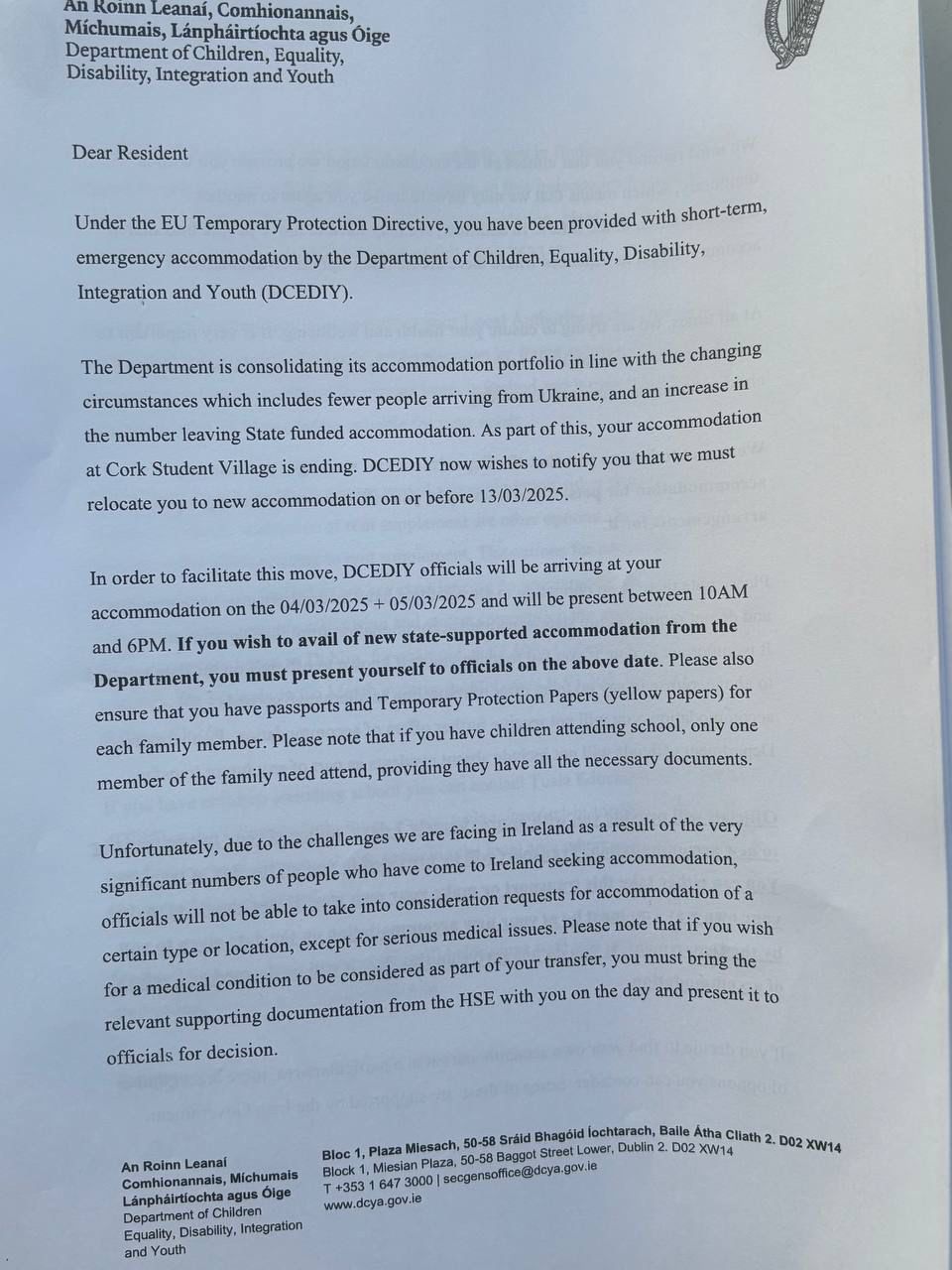
However the circumstances developed, the Department of Children, Equality, Disability, Integration and Youth has recently issued what are effectively hundreds of eviction letters to families and children across the country.
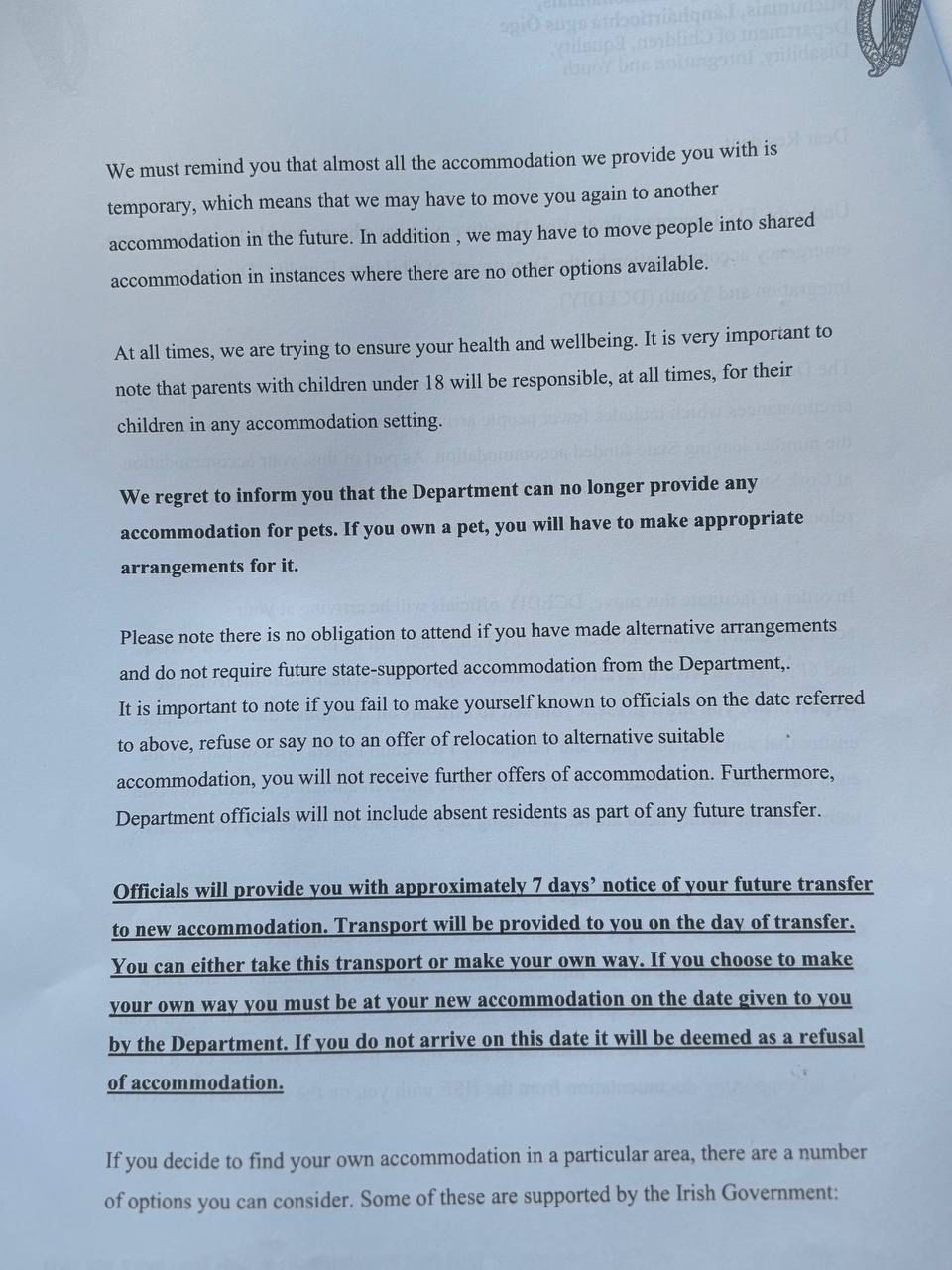
The letter is utterly devoid of compassion or humanity. The word ‘regret’ is used once, but only in relation to pets. The letter has caused an incredible amount of grief, stress and upset among those who have been unfortunate enough to receive it.
When the war began we took in traumatised people. We took in people who fled before the horrors of Bucha, we took in those who had lost their homes, we took in those who had lost family members.
We then talked about trauma informed practice, and, in schools at least, tried to keep this in mind when integrating our new students.
And now a department that is responsible for both children and integration is hurting children and undermining the integration that has been achieved. We are taking traumatised children, and retraumatising them
The letter provides the rationale that “the Department is consolidating its accommodation portfolio”. Two points here. The language in use is far beyond many of those who received the letter. Second, the department appears to be more concerned with a property portfolio than with the human beings under its supposed care.
The letter then gives a very tight timeline as to when these moves will happen.
In Youghal the residents at the Quality Hotel have been given about 2 or 3 weeks.
In Victoria Cross in Cork residents have been instructed to be available on 4th and 5th March between 10AM and 6PM with their documents. Failure to turn up will be seen as meaning that they are no longer interested in State Provided Accommodation.
Even better? They are then remined that they will be moved to temporary accommodation. In other words, don’t get too comfortable.
The damage this is doing to students is horrific. I know students who are preparing for State Exams and they don’t know where they will sit the exams. They do not even know if the town/city they are moved to will have a secondary school with the same option subjects. So they could end up not being able to complete their studies that they began 1.5 years ago for that option.
By moving students in the middle of the school year their studies are negatively affected. Even if they move quickly to a new school, the curriculum will have been covered in a different manner, different teachers have different styles, and the supports that a student benefited from are not immediately present.
The timing of this is very suspect. The Dail is currently not in session, so no TDs can make a minister answer questions in session. Was this deliberate, I wonder?
The letter appears to be unsigned – so who even is responsible for this decision?
The whole manner in which this has been done feels underhand. Again, the Department, in this action, is hurting children and undermining integration. All for the exercise of consolidating a portfolio.
There is now a series of articles being written, and more awareness about this issue. I really, really hope that something can be done to reverse this decision.
https://www.irishexaminer.com/news/munster/arid-41555347.html
Cork School Principal devestated
https://www.irishtimes.com/ireland/2025/01/14/were-very-afraid-ukrainian-refugees-in-limerick-given-48-hours-notice-of-being-moved/
https://www.rte.ie/news/regional/2025/0115/1491035-ukrainian-women-children-move-cork-hotel/
 John Hurley